The International Council for the Exploration of the Sea (ICES) Annual Science Conference, held from the 9th of September at the Glass House conference centre in Gateshead, brought together over 600 scientists from 22 countries across Europe and beyond.
For four days, attendees explored vital topics in marine science, fisheries management, and the future of our oceans. Among the attendees, the Northumberland Inshore Fisheries and Conservation Authority (NIFCA), alongside the Association of IFCAs, highlighted its work to promote sustainable fisheries and marine conservation efforts in the Northumberland district.
NIFCA’s Contribution to the Global Conversation
Representing NIFCA, Lead Environmental IFCO Alex Aitken delivered a presentation on the value of collaborative working. She emphasised how partnerships between conservation authorities, including Natural England in partnership with strong links to Newcastle University, and scientists are critical to achieving effective marine conservation while maintaining sustainable fishing practices.
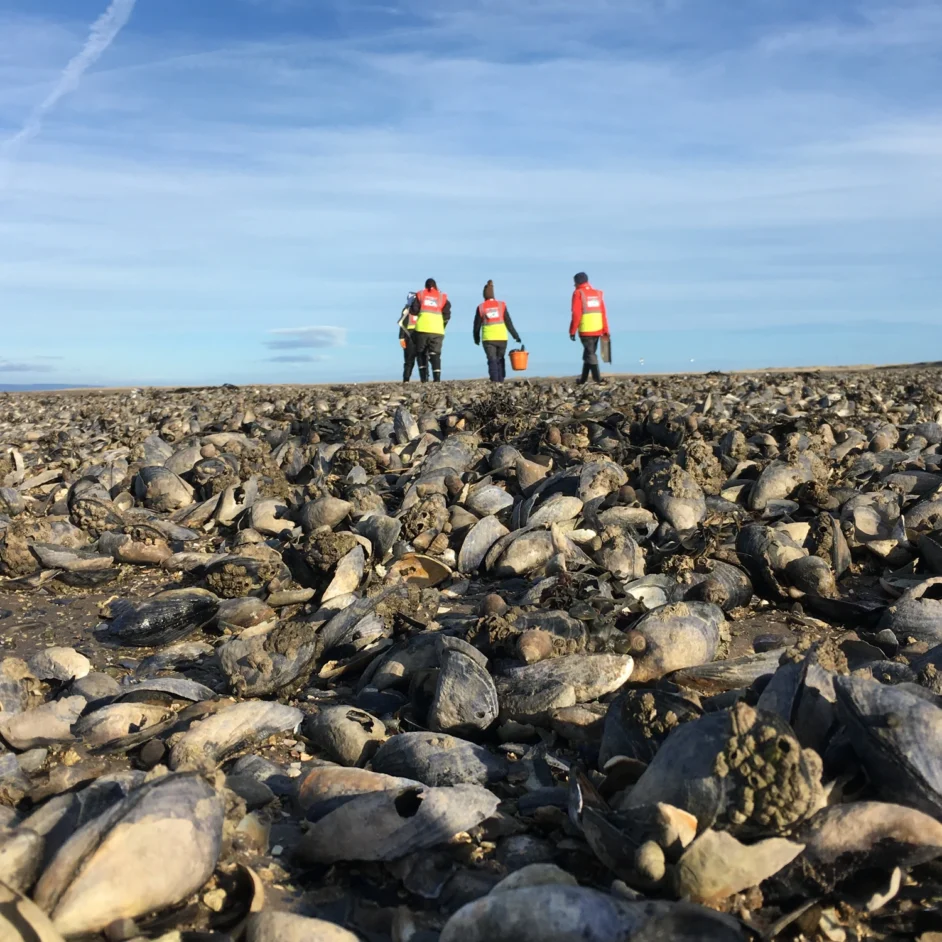
NIFCA’s Senior Environmental Officer Andrew Boon also contributed by showcasing the work done in Berwickshire and Northumberland in comparing the size of onset sexual maturity of edible crab. Additional information was also provided on the impacts and recovery of historic dredging within marine protected areas (MPA’s).
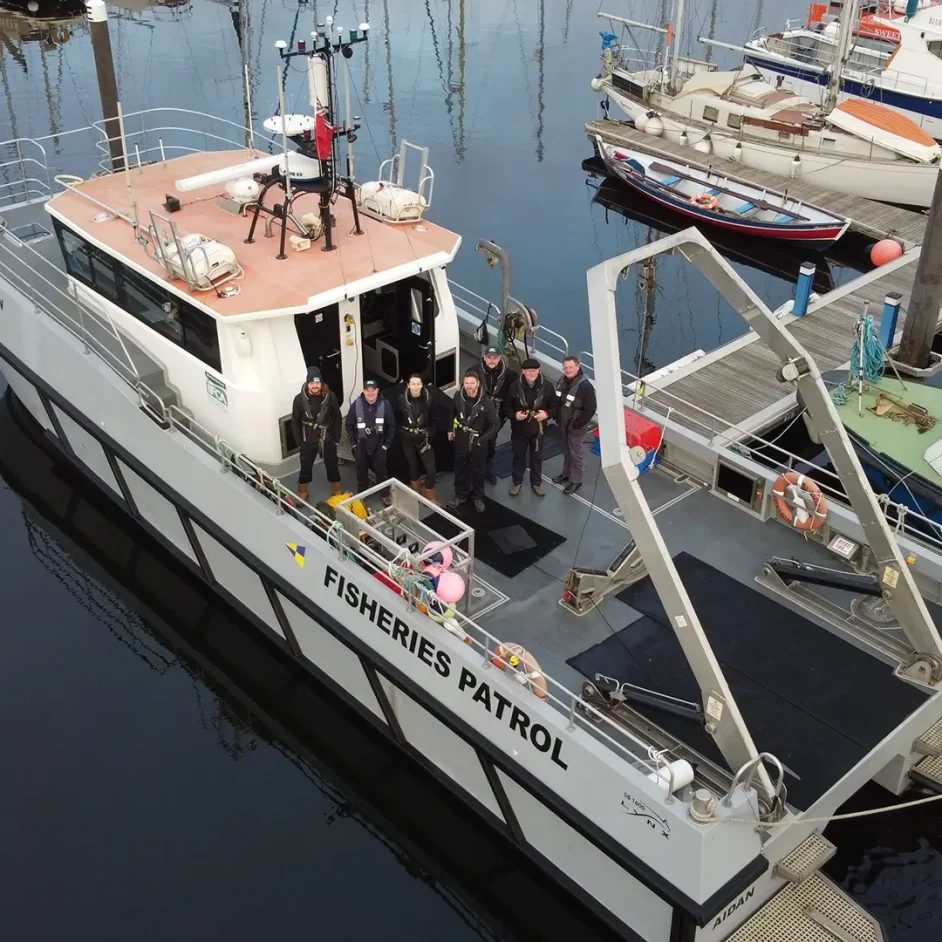
Delegates were also given the opportunity to tour NIFCA’s patrol vessel, St Aidan, which was moored on the Tyne opposite the conference hall. Mark Southerton, Chief Officer of NIFCA led the tours which were fully subscribed from day one. Aboard the vessel, visitors gained insight into the vital research and enforcement work carried out by NIFCA, which helps to balance marine conservation with the interests of local fishermen.
A Platform for Global Marine Science
The ICES Annual Science Conference spanned a broad range of marine-related topics, covering themes such as the ecosystem impacts of offshore energy expansion, climate change, and welfare-conscious, sustainable fishing for the 21st century.
These discussions were distinct from the ICES working groups, which regularly bring together scientists and fishing experts to compile data and create stock assessments. These assessments form the basis of the advice given to governments for fisheries management and quota decisions.
Mark Southerton, Chief Officer of NIFCA, commented on the significance of the event: “The ICES conference provided an excellent opportunity for Alex and her team to share the work of Northumberland IFCA and our counterparts up and down the country on an international stage.
“It allowed us to demonstrate how our efforts in Northumberland, from stock assessments to collaborative conservation, contribute to the broader, global conversation on sustainable fisheries management. It’s crucial that our local challenges and successes are recognised and considered within the context of global marine issues.
“We need to integrate local expertise and experience with international scientific endeavours. By engaging with the global scientific community, NIFCA not only showcases its initiatives but also learns from the latest developments in marine science, ensuring that Northumberland’s fisheries remain resilient and well-managed for future generations.”
‘Pride in the Seas’ Exhibition Highlights Challenges and Contributions
One of the features of the conference was the English incarnation of the Scottish Fishermen’s Federation (SFF) ‘Pride in the Seas’ exhibition, which made its way to Gateshead after its initial unveiling in Holyrood earlier in the year.
The exhibition tells the stories of individuals from the inshore fishing sector, including several fishers from the NIFCA district, and highlights the dramatic changes the industry has faced over the past decade.
With a focus on more than just fishers, the exhibition also shines a light on the contributions of fisheries managers, scientists, and representatives from various fisher organisations, all working towards sustainable fisheries. The exhibition was made possible through new funding from Newcastle University and showcases the many challenges faced by the industry as it navigates uncertain waters.
Sarah Coulthard, the Newcastle University researcher who spearheaded the project, explained the importance of the exhibition: “Pride in the Seas invites the public to reflect on our commercial fishing industry, the many contributions our fishing families make to society, and the accumulation of challenges they must navigate in a sector experiencing unprecedented change and uncertainty.
“The exhibition also seeks to send a message that whilst the scientific community may not always be able to support what fishers want, we are listening and take pride in the work of fishing and the many partnerships we forge in our collective pursuit of sustainable fisheries.”
Sarah also emphasised that the exhibition aims to foster dialogue and inspire positive change within the fishing industry, ensuring that the sector can continue to thrive despite its challenges.
Looking Ahead
For NIFCA, the ICES conference was not just an opportunity to present its achievements but a chance to engage with the global scientific community, learn from international best practices, and continue its mission of balancing marine conservation with the needs of local fisheries. Through initiatives like the brown crab project and platforms such as the Pride in the Seas exhibition, NIFCA remains committed to ensuring that Northumberland’s fishing industry is sustainable, resilient, and well-prepared for the future.
ICES Annual Science Conference 2024 – Take a look back! https://www.youtube.com/watch?v=7IySUzru2x8
Conference delegates had the opportunity to tour NIFCA’s patrol vessel, St Aidan, which was moored on the River Tyne.
Please note that our next Quarterly Meeting will be held at Newbiggin Maritime Centre, Church point, Newbiggin-by-the-Sea, NE64 6DB on Monday 28 October 2024 at 1pm.
The meeting is open to all. If you have any queries or would like to attend, please email nifca@nifca.gov.uk.
Please click on the link below where you will find the relevant information regarding the above survey.
Notice to Mariners NSL North Sea Link Geophysical & Environmental Survey
Please click the link below where you will find the relevant information regarding the above survey.
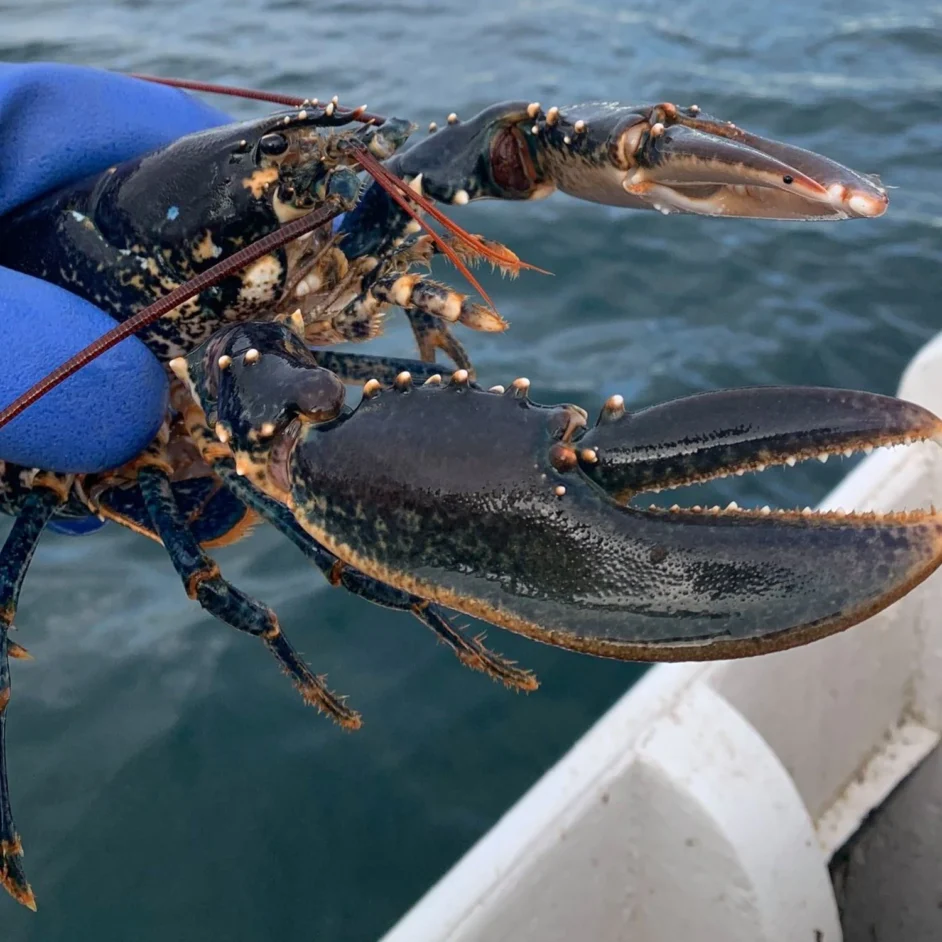
We are pleased to announce this year we have restarted our lobster v-notching scheme.
Each year from 2000-2017 NIFCA ran a successful lobster v-notching scheme, through which, over 20,000 female European Lobsters were purchased, v-notched and released into the Northumberland district. Following the 2017 national prohibition on landing berried hens , v-notching was put on hold, however following feedback from the local industry this year, it has been restarted.
V-notching schemes have been implemented globally and are a widely recognised fishery conservation management tool by both scientific and fishing communities to help sustain lobster fisheries. Their objective is to maintain a healthy reproductive population to provide continual recruitment of lobster offspring to the stock, creating a sustainable and profitable fishing industry.
NIFCA Crustacea Conservation Byelaw prohibits the landing of a lobster with a v-notch cut in its tail, thereby protecting it from the fishery. The annual v-notching scheme therefore contributes to the reproductive potential of our local lobster stocks. The previous scheme was well supported by pot fishermen in the district, many of whom attribute it, in part, to the sustainability of the fishery.
As part of the programme, NIFCA purchase lobsters from the wholesalers which have been removed from the fishery. Before release, lobsters are measured and recorded, then v-notched. This process involves removing a V shaped piece of the exoskeleton from the uropod, the inner tail flap, of lobsters of reproductive size. While the lobster retains this v-notch, it is essentially removed from the fishery, legally protected by national legislation and NIFCA’s byelaw from being landed. This year to date, over 1070 lobsters have been measured, v-notched and released across the whole district. This year, one male lobster has been released for every 15-20 female lobsters. Research has been found that female lobsters preferentially mate with larger males and conservation measures targeting only females risks an imbalance between male and females in the local population. V-nothing a small number of larger males can help maintain that balance, increasing the reproductive potential of this ecologically important species.
As part of the previous programmes, NIFCA distributed V-notch pliers free of charge to all shellfish permit holders within the district, along with recording forms to capture levels of v-notching carried out by local fishermen. These forms provide valuable information on the levels of v-notching, to estimate the proportion of lobsters that are protected from the fishery and to inform future stock assessments. This aim this year, and for future years, is to encourage this practice again from the local fishermen to contribute to the success of this scheme.
NIFCA would like to extend sincere thanks to Blyth Fish Ltd., D.R. Collins and Sons Ltd., and TC Fish Ltd, as well as several local fishermen, for providing lobsters, without whom this scheme would not have been possible.